
Industry 4.0 Applications
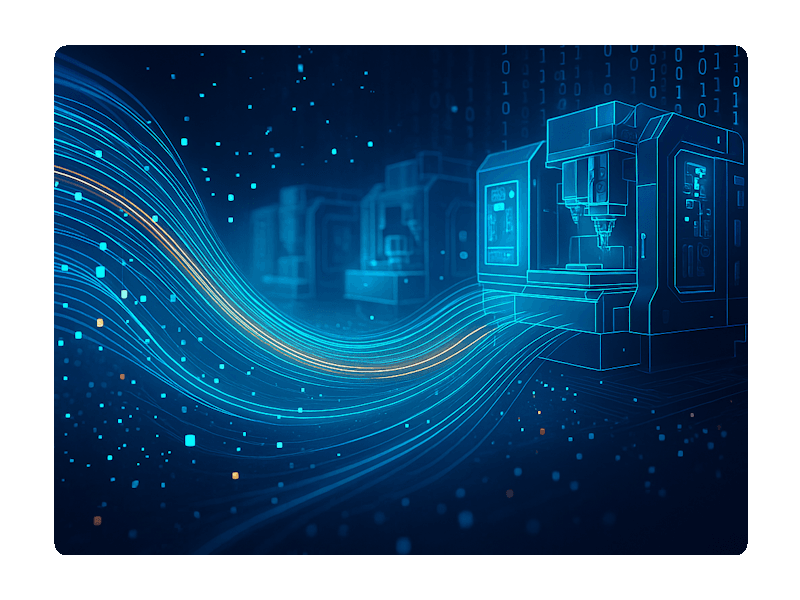
REAL-TIME DATA COLLECTION & MES INTEGRATION
All workstations and CNC machines used in our production site are integrated with the MES infrastructure. In this way:
• Production parameters, process data and machine status are collected in real time and monitored on the central platform.
• Operational performance, downtime analysis and production efficiency are monitored in real time.
• CAM programs are created from digital models and tool paths and processing parameters are transferred to CNC machines without manual intervention.
• Thanks to this structure, digital continuity has been established in the process from design to production.
• All processes are controlled centrally and data-based decision-making mechanisms are created.
This system allows not only monitoring but also functions such as engineering calculations, process analysis and product costing to be carried out in an integrated manner in a digital environment.
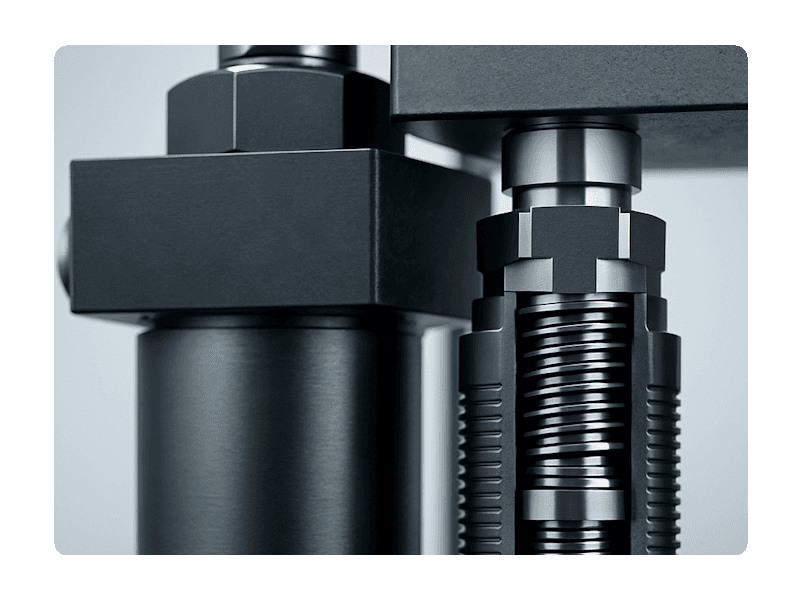
SMART FIXTURE SYSTEMS
With hydraulic rapid fixturing solutions, the clamping process of the parts is optimized with a focus on high repeatability and speed.
• The system used increases stability during processing by providing repeatable clamping with micron-level precision.
• Increases process stability by minimizing operational effects.
• It significantly reduces part setup time, shortens cycle times and increases mass production capability.
This structure provides quality assurance in production requiring high precision, and also offers significant advantages in terms of time efficiency and process acceleration.
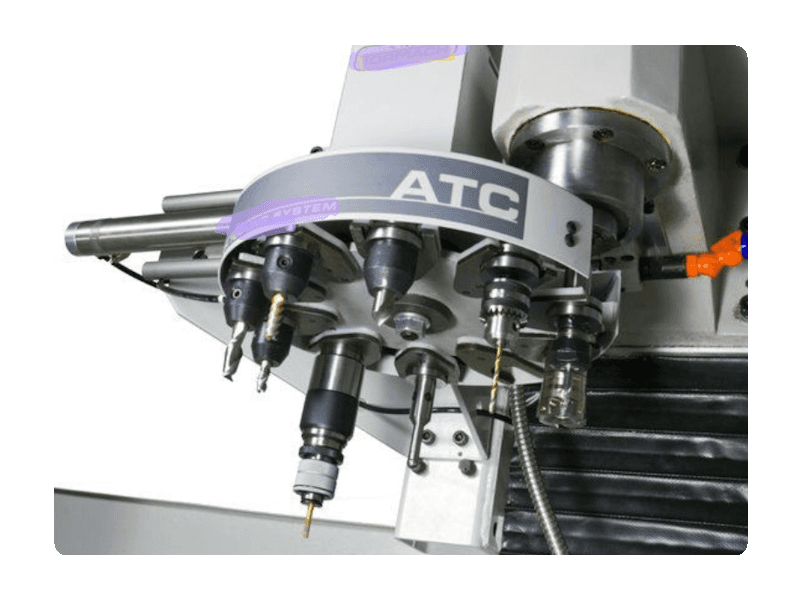
SMART TOOL MANAGEMENT & QUICK TOOL CHANGE
ATC (Automatic Tool Changer) systems and Capto quick tool connection infrastructure used to increase production efficiency are structured to support the goal of uninterrupted production in the process flow:
• By increasing the number of tools, the need for tool changes in long-term operations has been significantly reduced.
• This structure enables multiple long-cycle parts to be processed continuously without operator intervention.
• Continuity in production has been achieved by uninterrupted processing of high volume work pieces.
• Tooling organization and management can be monitored through digital systems and optimized at the operational level.
Thanks to this structure, maximum continuity is achieved with minimum downtime in production lines; especially in sectors that require precision and efficiency, such as aviation, high-precision production can be carried out without any loss of time.
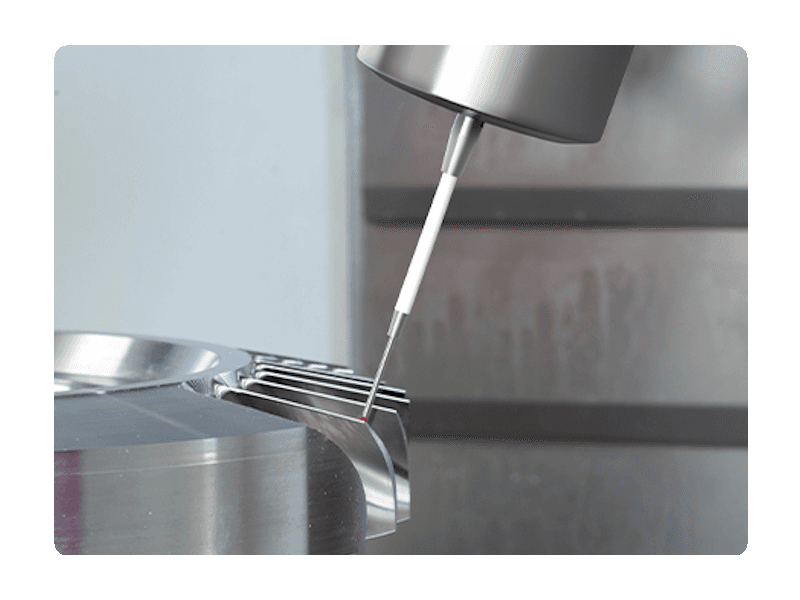
AUTOMATIC MEASUREMENT SYSTEMS
With Renishaw-based probe systems, measurement and control processes during production are automated:
• Critical measurements are made directly on the workstation,
• Measurement results are collected integrated into the CNC and MES system, providing instant process control,
• Closed-loop production control is performed by minimizing human error.
In this way, quality control processes have become digital and integrated with production.
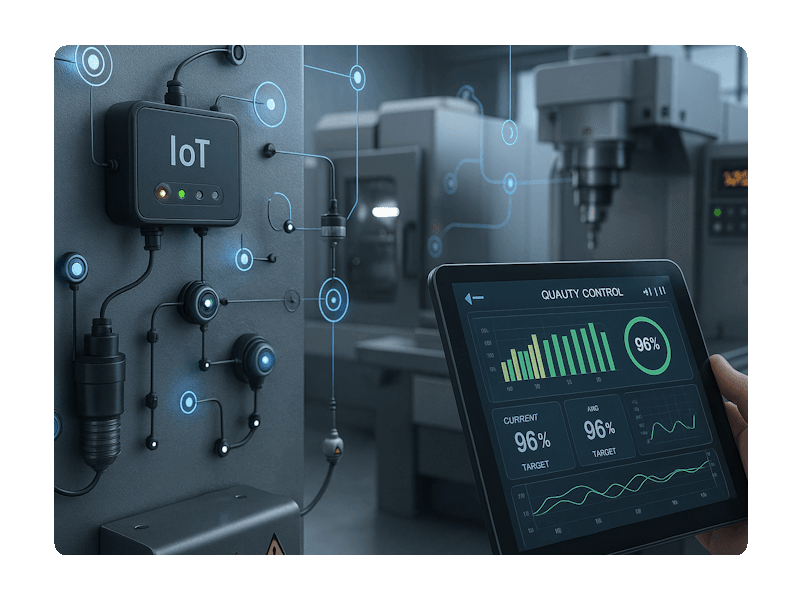
IOT-ENABLED QUALITY RECORDING AND TRACEABILITY
IoT-based systems used in our production line digitalize both quality management and operational processes, ensuring traceability of all steps.
• Part-based guidance is provided through digital work instruction screens created specifically for each operation, eliminating the risk of confusion during production.
• Measurement and quality data collected throughout the production process are matched with the relevant operation and recorded instantly through the system.
• The collected data is stored in digital archives for a long time and provides full traceability in audit processes.
• In addition, the system provides transparent and fast access to quality control teams by creating automatic reports and production history logs.
Thanks to this infrastructure, both operational standardization and digital quality assurance systems are operated in an integrated manner.

DIGITAL ENGINEERING & SIMULATION-BASED PROCESS OPTIMIZATION
The data collected is not only for monitoring purposes, but also:
• Preparation of process simulations and flow plans,
• Conducting cost analysis,
• Efficiency optimizations,
It is widely used in its operations. In addition, control points, document tracking and audit processes related to the quality management system are also carried out in a planned and traceable manner through digital platforms. In this way, a data-driven continuous improvement and traceability culture has been established.
This digital infrastructure forms the basis of our Industry 4.0 vision and provides a solid foundation for future AI-supported decision-making mechanisms.